

In our last post, Grants 101, we spoke about grants for for-profit social enterprises on a high level. What even is a grant? Where do you start? How should you approach grant funding? If you’re looking for:
What work is eligible for impact grants
What you need to know about grants
Who gives grants
What you (most likely) won’t get grant funding for
What you need before you start applying
What a grantor may require when you apply
What a grantor will ask you for when you win
Is the juice worth the squeeze?
Click here or below.

For new founders or those making grant funding a part of their 2026 impact strategy, that’s a great place to start.
Here we’ll dive in a little deeper:
Types of Grants
Where and how to start looking for grants
Two strategies for getting grant funding: Reactive Vs. Proactive
*Note… We’ll keep this high level as part of this series and get more into the details in future posts.
Let’s get into it.
Types of Grants
In our last post, we highlighted the types of organizations that give grants. Here are the types of grants they give.
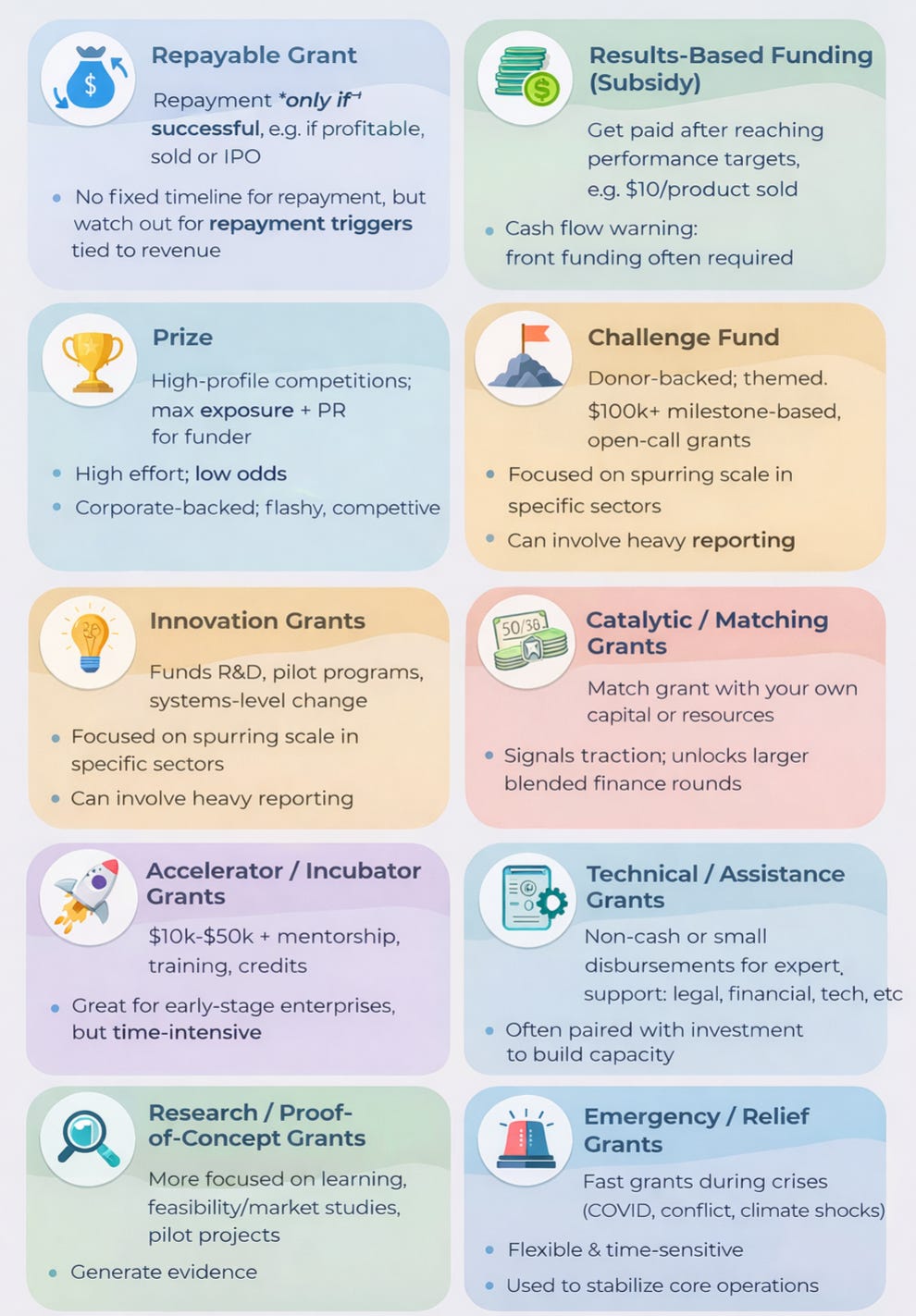
Want to learn more about each type? Click here or below.

Where and how to start looking for grants
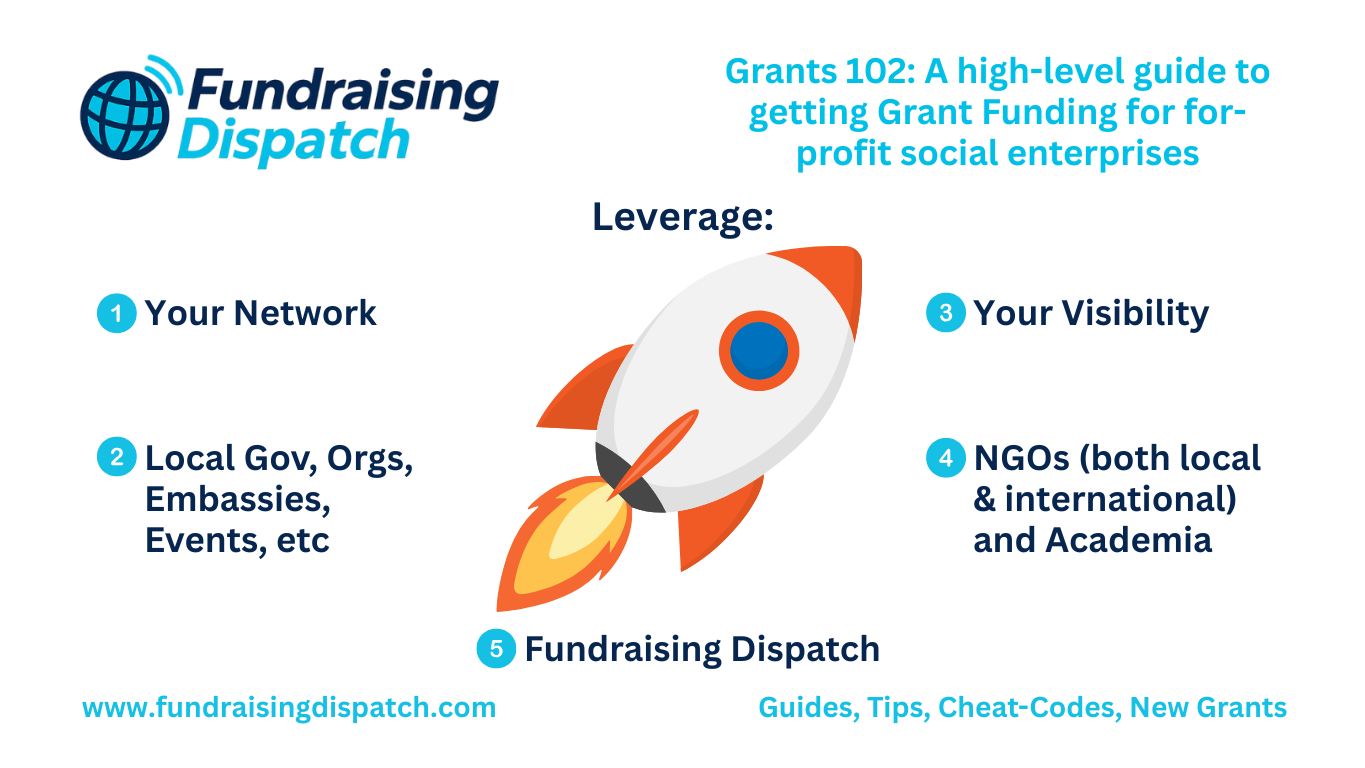
Leverage:
1. Your network
Who do you know that has raised grant funding? (Preferably in your geography/sector). Ask them:
How did you get it?
Would you be open to connecting me with your contacts?
What corporates/large multinationals do you work with (or can work with)?
Can you get in touch with their CSR / Sustainability Teams?
If you have a contact at a foundation or have worked alongside one as a partner before, you are far more likely to be considered for funding.
Even with formal RFP responses and applications… it really is who you know.
Full email & LinkedIn outreach templates to use for premium subscribers below 👇
2. Local Governments / Organizations / Embassies
Leverage groups that understand your local context
Connect with local business support organizations like Incubators/Accelerators, Chambers of Commerce, World Trade Centers, etc
Find out what national, regional, and local government-run/supported funding programs are available. Research, email, call, and show up in person to get the info (and contacts) you need.
3. NGOs (both local and international) and Academia
Especially if they work in your sector or your missions overlap
Establish relationships and find opportunities to partner
You never know when a non-profit or university might need a private-sector sub-grantee or on-the-ground implementation partner!
4. Your Visibility
Let funders find you
An entire playbook for premium subscribers below 👇
5. FundraisingDispatch.com
Get newly published RFPs and grant opportunities direct to your inbox. Leverage curated lists of rolling/recurring opportunities.
Don’t spend your time:
Endlessly scanning platforms where the majority of grants listed are for organizations (usually nonprofits) in the USA, UK, and Europe
Following 50+ LinkedIn accounts
Registering for databases that almost exclusively highlight fellowships, trophies, pitch competitions, and promises to win cloud credits (i.e. ignore programs with no direct monetary or educational value)
And subscribe to premium to get access to our database:
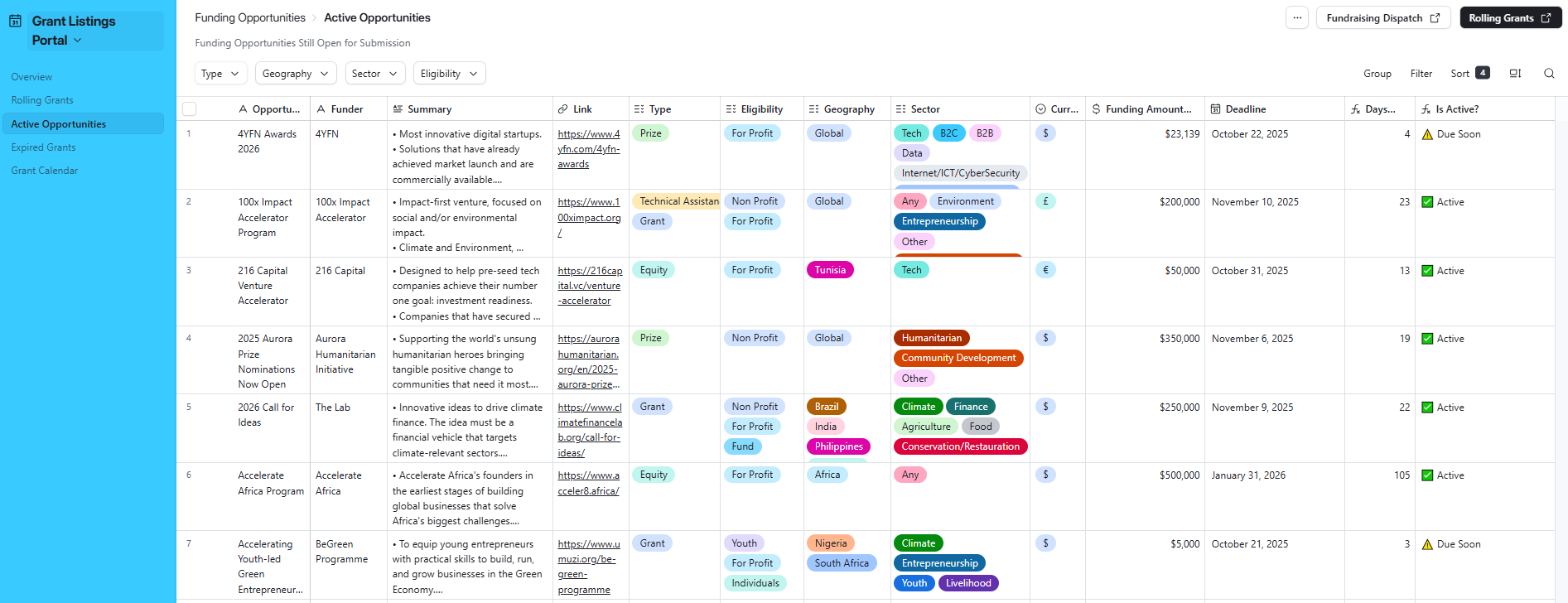
Grants Searchable, Sortable, and filterable by:
Deadline | Funding Amount | Type of Funding | Geography | Sector | Eligibility

Reactive vs. Proactive
So based on the summary above we can effectively group ways that for-profit social enterprises can actually get grant funding into two paths/strategies.
Being Reactive
The more straightforward path.
A funder publishes an RFP or call for applications
You learn about it on FundraisingDispatch.com
You carefully assess its eligibility requirements, look through the FAQs, and otherwise read the fine print and determine that you are indeed eligible
You decide to apply on your own (leveraging our guides and tips/tricks to writing a winning application) or work with an expert like Grant & Co
You wait months for news and cross your fingers
Being Proactive
Requires patience and consistency.
You actively post on LinkedIn, write reports/blogs, have a consistent funder update newsletter, and otherwise publish your findings - all to increase your visibility and help funders come to you
You meet funders (or potential NGO or other project partners) where they are: their offices, conferences, networking events, pitch competitions, etc
You cold email or send LinkedIn requests to make new connections
And you build relationships. You play the long game.
Entire walkthroughs, playbooks, messaging templates and more for paid subscribers below 👇
In either case persistence is key. Knock on many (relevant) doors as you can (both through relationship building and formal applications) in order to land grant funding.
More visibility = More probability
Whether you’re being reactive (responding to an RFP/call for applications) or proactive (leveraging existing connections or making new ones), the more visibility you and your work has, the more likely you are to obtain grant funding.
At the end of the day, a human being is reviewing your application, right?
They will make decisions based on the information you present AS WELL AS any emotional and/or subconscious feeling they have about you, your social enterprise, your brand or your work/impact.
And if someone on the CSR team at a large corporate or their foundation has autonomy to give grant funding outside of an RFP process… who are they going to choose?
The more known you are to grant funders… the more potential you have at getting their funding.
Coming soon!
What’s next in this series!? “Grants 103 - Writing winning grant applications”
What’s below for paid subscribers?
Template for reaching out to another founder
Template for reaching out your corporate/multi-national partner/clients
Template for reaching out to someone from “back in the day” who now works at a foundation, NGO, or another organization that could potentially provide you with grant funding.
Strategies to increase your and your work’s visibility
Strategies to nurture relationships
Templates and Strategies for networking/outreach to DFIs, NGOs, Academia, Research, Community/Advocacy organizations
Tools to use to find anyone’s email address
